

By Al Bello, Offset Training Group | PhD Candidate
CEO at Offset Tactical & Offset Consulting LLC | U.S. Marine Infantry Gunnery Sgt (Ret) | IADLEST Nationally-Certified LE Instructor | Police Commander
August 20, 2026
One of the things we live by and have engrained in our instructors at Offset Tactical is to train all police officers not as “shooters”, but as use of force practitioners. Is this a departure from what other shooting schools/trainers do? YES. We realize that 90% of the shooting classes out there focus around making the students better shooters. Hear me out as to why I think this approach is doing the LE community a disservice.
In the stark and often unforgiving reality of law enforcement, where each decision can ripple through lives and communities, embracing technologies like red-dot sights isn’t just an enhancement; it’s a necessity. The truth is, reality is ugly, unpredictable, and doesn’t pause for hesitation or second-guessing. Our officers, standing on these frontlines, need every tool and advantage not just to respond effectively but to make informed decisions under this intense pressure. Red-dot sights, in this context, are far more than an aid for precision; they’re a crucial component in the larger narrative of situational awareness and decision-making in law enforcement.
The Harsh Reality of Policing and the Need for Evolution
Traditional law enforcement training on firearm use has primarily been about shooting accurately and quickly. But the reality of policing is far more complex than just hitting a target. It’s about making split-second decisions that usually mean life or death. In such high-stakes scenarios, where every detail matters, the narrow focus provided by traditional iron sights is a glaring limitation. It’s not just about shooting accurately; it’s about understanding the entire situation before pulling the trigger.
Both Eyes Open: Reality and Training for the Real World
The adoption of red-dot sights allows officers to keep both eyes open, a simple yet profound shift from traditional practices. This method enables a wider field of vision, crucial in real-life scenarios where peripheral vision can make a significant difference. The ability to take in more of the scene, to be aware of more than just the immediate threat, is invaluable. It aligns training closer to the realities officers face — where the environment is dynamic, and multiple factors must be considered in the blink of an eye. Real-life policing isn’t clean-cut. It’s chaotic, fast-paced, and full of variables. Red-dot sights offer a way to cut through some of that chaos, providing officers with a tool that enhances their situational awareness. By allowing for faster and more intuitive target acquisition, they enable officers to maintain a broader view of their environment, to be better informed and thus make better decisions. This is crucial in a world where the right decision can mean the difference between tragedy and resolution. As I say in our FOCUS™ Red-Dot training classes on the regular:
“Red-Dots don’t make cops better shooters, they make cops better informed Use of Force practitioners when deciding to use deadly force.”
Redefining Firearms Training: Preparing for Reality
With the introduction of red-dot sights, the role of firearms instructors in law enforcement must pivot significantly. Instructors should never just teach officers how to shoot, as they’re preparing them for the harsh realities of their job. This means scenario-based training that reflects the true nature of the situations they’ll face — unpredictable, rapidly evolving, and multifaceted. Officers must be trained to process complex information swiftly and accurately, to navigate the gray and often chaotic nature of real-life encounters. This doesn’t always mean instructors need to spend vast amounts of money on setting up scenarios or bringing in role players and such. Most police encounters involve decision-making under stress. Find a way to create the unknown, induce stress either by introducing a time limit or elevating heart rates, and run a decision-making drill.
In the Marines, Instructor Development taught me one thing: Making decisions under stress is a trainable skill. Repeated exposure to it makes you better at it.
Takeaway
The integration of red-dot sights in law enforcement is more than just keeping pace with technology — it’s about equipping our officers with the right tools to face the brutal realities of their job. These tools augment their ability to assess, decide, and act in situations that are anything but straightforward. In the end, it’s about ensuring that when an officer is compelled to use deadly force, it’s with the fullest understanding of the situation. Can’t do that with one eye closed. This isn’t just an upgrade in equipment; it’s an essential step in evolving our approach to law enforcement in a world where reality is rarely black and white.
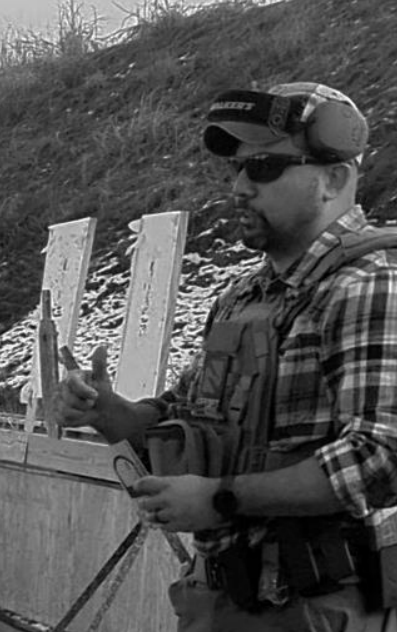
About the author: Al is the Founder of Offset Consulting and Offset Tactical. He is a 21-year veteran of the US Marines and has been sworn law enforcement for over 20 years in the State of Illinois.