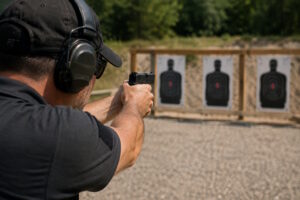
As summer temperatures in Arizona routinely climb above 110 degrees, firearms training can become more than uncomfortable for police officers — it can be outright dangerous.
For the Apache Junction Police Department outside Phoenix, the intense desert heat was creating serious challenges on its outdoor firing range, where officers are required to complete qualifications and tactical training year-round.
“Before the CoverShots canopy, we would shoot for four hours and people would fall out in the warm months all the time,” said Josh Hooper, the Rangemaster at Apache Junction PD.
Like many law enforcement agencies across the Southwest, the department relies entirely on an outdoor range. Building an indoor facility was explored, officials said, but the cost proved unrealistic.
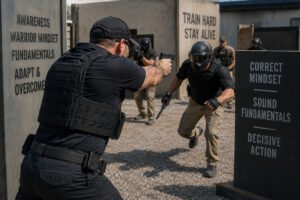
That left instructors trying to balance two competing priorities: preparing officers to operate in real-world heat conditions while also preventing heat-related injuries during training.
“It’s not just about comfort,” Hooper said. “You still have to train in the heat. Officers need to know what it feels like. But there’s a point where the conditions interfere with the training.”
According to the department, prolonged exposure to direct sunlight and radiant heat was reducing concentration, increasing fatigue and limiting how much meaningful training officers could complete during the hottest months of the year.
“What kind of repetitions are we even getting at that point?” Hooper said. “Conditions were so terrible, what’s the point?”
The department said it frequently reduced range schedules during peak summer months because of the heat.
“Prior to the CoverShots, we would train at the beginning of summer and the end of summer,” Hooper said. “We hardly did anything from June to August.”
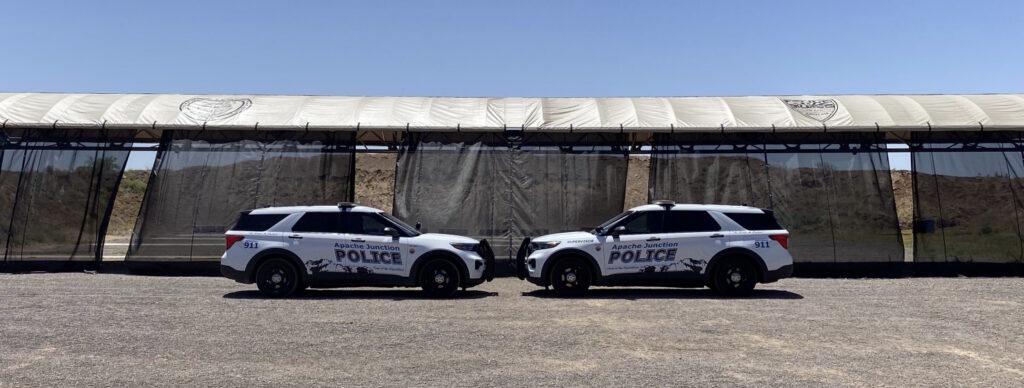
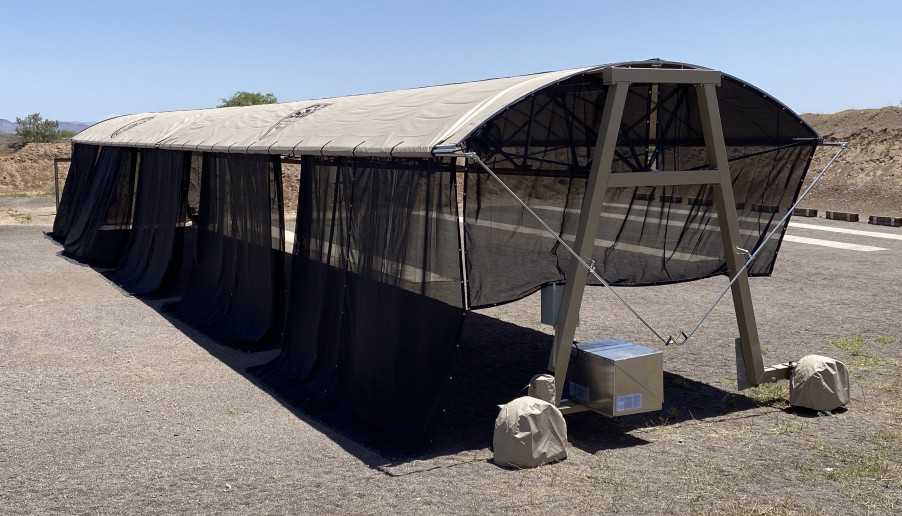
That changed after the department installed a large motorized CoverShots mobile canopy system as part of a city-funded capital improvement project. The canopy provides shaded coverage for approximately 30 shooters at a time and is designed specifically for outdoor range operations.
Hooper described the impact as a “game changer” for Arizona conditions.
“It still may be 120 degrees outside, but under the canopy it feels more like 105,” he said.
While temperatures remain extreme, the reduction in direct sun exposure has allowed instructors and officers to remain productive on the range for longer periods of time, according to the department.

Officials say the department has since increased training frequency, expanded available range time and improved year-round firearms readiness.
“Just the training benefit and frequency alone — we’re training better cops to be better gunfighters now,” Hooper said. “We can train year-round.”
The department also reported a significant reduction in heat-related training issues since the canopy was installed.
Leadership increasingly views environmental protection during training as a safety necessity rather than a convenience, Hooper said.
“A canopy is like PPE,” he said. “We have to train in the heat, but we have to do it responsibly.”
The system has now operated through multiple Arizona summers, including monsoon storms and high winds. According to the department, the structure has held up well under constant outdoor exposure.
For agencies facing similar conditions, departments are beginning to see outdoor range weather protection as an operational necessity rather than a luxury.
Contact: info@cover-shots.com for more information.